Mandate Order City Layout
Plan districts, roads, and defense corridors in a grid-free Warring States stronghold
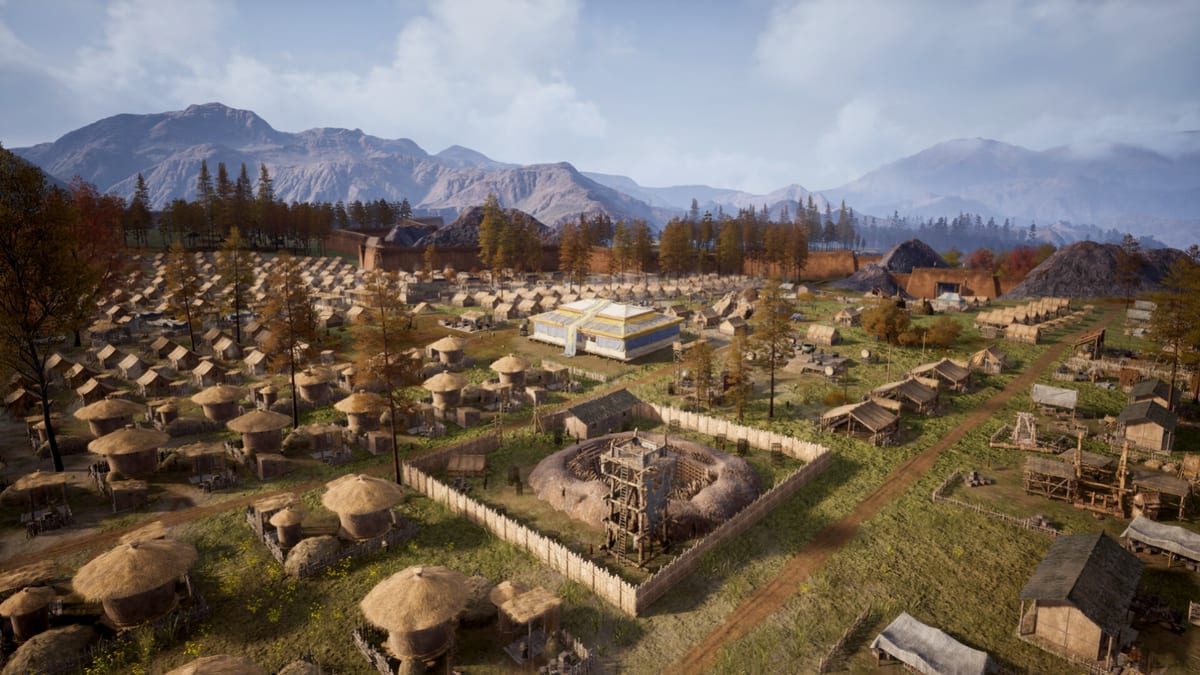
Mandate Order gives you freeform construction without grids or blueprints, but it does not reward random sprawl. Digital Sky’s organic city growth still follows hard rules: peasants walk real paths, couriers haul visible goods, seasonal farms need reachable fields, and sieges test whether defenders can climb walls faster than battering rams crack gates. A good city layout reduces travel time, clarifies freight demand, and leaves room for walls and siege engines without bulldozing half your economy.
This guide focuses on district planning on frontier and mid-game maps entering Early Access around August 12, 2026. It complements the opening build order sequence and assumes you understand non-global storage from warehouses and storage.
Layout goals beyond aesthetics
Players often approach layout as screenshot hunting. In Mandate Order, layout is logistics and combat latency. Every minute a courier spends crossing a decorative forest is a minute workshop inputs sit idle and armory shelves stay empty. Every wall segment without a nearby stairwell is a segment archers cannot reach before ladders land.
Treat layout as answering four questions:
- Where do peasants sleep and fetch water?
- Where do fields, mines, and workshops sit relative to storage?
- Which road spine connects those nodes with spare courier capacity?
- Where will gates, wall faces, and sally routes exist under siege?
If you cannot answer the fourth question by mid-game, pause expansion and scout chokepoints on the map guides.
Residential and well districts
Cluster homes near wells with short, safe paths. Freeform build lets you follow terrain; use that to terrace housing on gentle slopes rather than scattering huts across cliffs that winter workers cannot climb quickly.
Keep residential zones upwind or downstream of heavy industry where previews show smoke or noise affecting morale. Exact mechanics may shift in Early Access, but separating smithing clusters from fresh housing is inexpensive insurance.
Plan growth pockets: leave plazas or terraces for additional homes when population rises so you do not later delete farms to cram families behind walls.
Agricultural belts and seasonal access
Seasonal farming needs fields workers can reach year-round. Mandate Order previews emphasize expected yield feedback rather than surprise famine, which means layout still matters: a field isolated by a river without a ford becomes a seasonal liability.
Ring fields around warehouses or freight pickup points instead of around distant manor houses. Harvest labor is precious; do not make peasants cross the entire city to deposit grain.
Coordinate farm belts with the production chains guide. Food surpluses feed stability; shortages trigger conscription and building slowdowns at the worst time.
Industrial zones and armory proximity
Workshops processing ore and timber should sit on flat ground with road access to both input mines or logging areas and output warehouses. Stacking every workshop on one hill looks efficient but creates single-point bottlenecks when raids destroy one road.
Place armories between industry and defense lines. Previews describe weapons moving from workshops into armories before conscription assigns troop types. If the armory hugs the frontier wall while workshops hug the rear valley, wartime reinforcement follows long paths exactly when timers are tight.
Use the buildings reference to compare structure footprints as you zone districts. Larger footprints need wider roads for courier clusters.
Road spines, gates, and courier capacity
Build at least one road spine that links housing, storage, industry, and future gates. Branch secondary paths instead of forcing all traffic through a scenic market square.
Courier posts belong at hubs where many freight demands intersect: warehouse row, workshop yard, armory lane, wall gate interior. Under-capacity hauling looks like a production bug but is often layout distance.
When plotting gates, leave interior mustering space for formations described in formations and line drawing. Units need room to form up before they step onto wall walks.
Defensive rings and expansion direction
Walls in Mandate Order are build objects tested in real-time sieges with engines and breaches. Layout defensive rings in stages:
- Inner core: wells, primary warehouses, armory, command structures.
- Middle belt: workshops, additional storage, barracks.
- Outer works: fields, mines, forward towers, future expansion pads.
Expand outward deliberately. Swallowing distant ore nodes without wall segments exposes couriers to raiders preview footage shows probing supply lines.
Read walls and siege before sealing gates. Some faces want towers and engine platforms; others want kill zones for polearm infantry.
Retainers, morale, and cultural districts
Retainers from the Hundred Schools of Thought attach to buildings or armies with policy effects. Reserve space near administrative or command buildings for retainer assignments you use often, reducing cross-city treks when swapping advisors during crises.
If previews or patch notes mention morale-sensitive structures, group them away from slaughterhouse or prison clusters unless your strategy intentionally accepts penalties.
Common layout mistakes
Beauty over bandwidth: Long curved roads delay couriers. Straight functional spines with short decorative branches usually outperform spirals.
Single warehouse syndrome: One central warehouse far from everything increases travel. Multiple specialized warehouses with clear freight rules often beat one monument storage pile.
Wall hugging everything: Packing all industry inside the first palisade starves outer farms and mines. Stage walls as your economy grows.
Ignoring map elevation: Archers and engines care about height. A flat layout on sloped terrain wastes high ground.
Iterating layout without wiping the city
Early Access will change building sizes and ranges. Rebuild in slices: fix the armory lane first, then warehouse row, then farm pickup paths. The tools section may later host layout overlays; until then, screenshot your freight demand panel before major moves.
Related guides
- Opening build order for timing structures you zone here.
- Production chains for input-output placement.
- Warehouses and storage for demand configuration.
- guides hub for onboarding and livelihood systems.
A Mandate Order city that looks historical but moves goods like a modern warehouse district will survive longer than a palace that cannot feed its own archers.
Frequently Asked Questions
Quick answers drawn from Early Access systems and common player questions.
Is there a grid for placing buildings?
No. Mandate Order uses freeform organic growth. Layout is player-directed, but peasants and couriers follow physical paths and distances you create.
How close should workshops be to warehouses?
Close enough that courier trips stay short under wartime load. Workshops need steady inputs and outputs through freight stations; long distances mimic material shortages.
Should farms be inside or outside walls?
Early farms often sit outside the first wall ring for space, but that exposes fields to raids. Expand walls or guard outer belts before enemies target supply lines.
Where should the armory go?
Place armories along routes between workshops and defensive lines so gear reaches conscription points and wall reinforcements quickly.